Playbooks№18
Match the speed to the door
Decide fast when a choice is easy to undo, and slowly when it isn't.
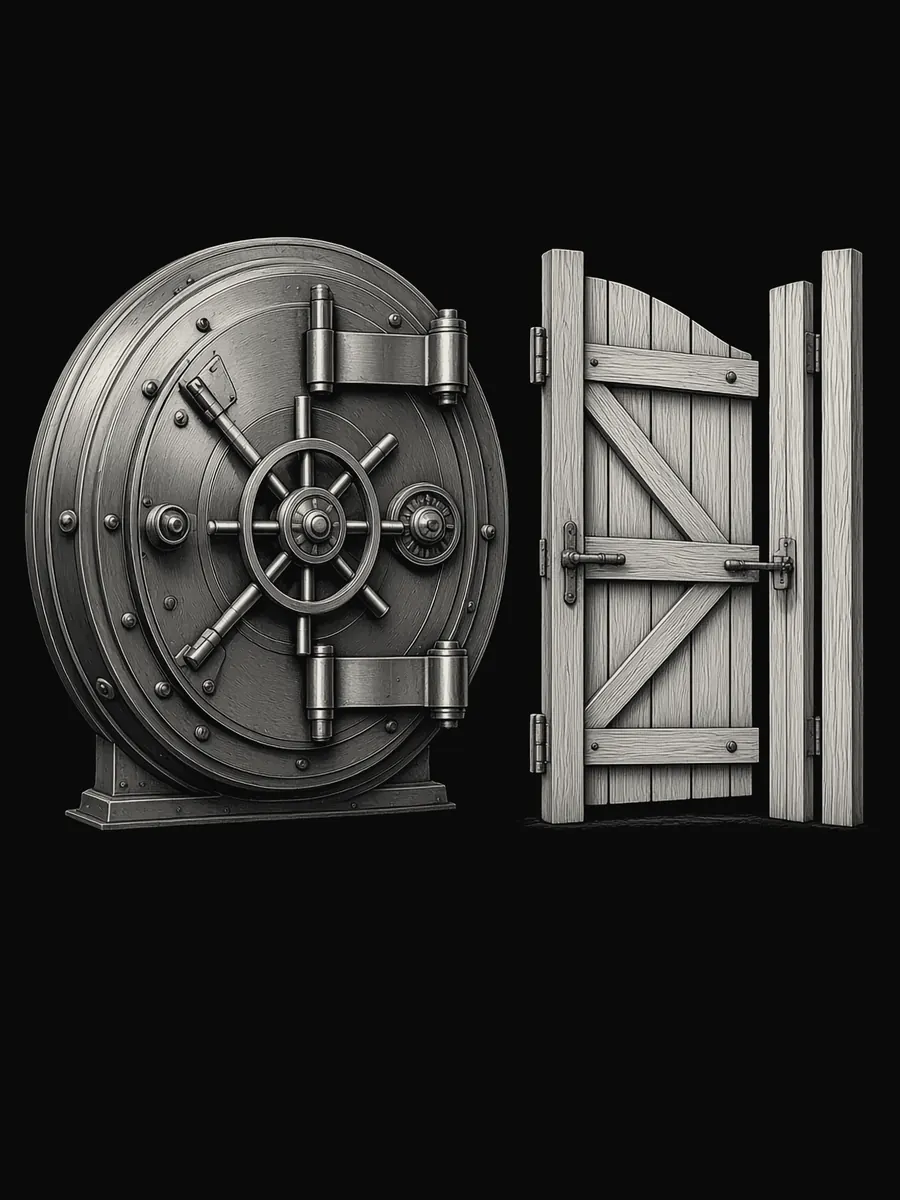
Two kinds of doors
In a letter to Amazon shareholders, Jeff Bezos splits decisions in two. Some are “consequential and irreversible or nearly irreversible”, one-way doors. He calls these Type 1. “But most decisions aren’t like that”, he writes. They are “changeable, reversible”, two-way doors. Those are Type 2.
Match speed to the door
Bezos: Type 2 decisions “can and should be made quickly by high judgment individuals or small groups.” Type 1 decisions must be made “methodically, carefully, slowly, with great deliberation and consultation.” His warning is that growing companies drift into using the heavy process for everything.
| Easy to undo | Hard to undo | |
|---|---|---|
| Fast decision | Good | Risk |
| Slow decision | Waste | Good |
The two failure squares
Being slow on a two-way door wastes time you can’t get back. Being fast on a one-way door is how companies make the mistakes they can’t recover from. The error is treating every door the same.
One-way doors early on
- choosing a co-founder
- choosing a lead investor
- locking the core architecture
Almost everything else, from tools and pricing tests to small hires and roadmap order, can be walked back.
The AI-first version
Our take: AI turns more doors into two-way doors. A prototype, a landing page or a pricing test that took weeks now takes an afternoon, so reversible choices should be made even faster. Some AI choices look reversible and aren’t: letting agents act in production systems, training on customer data you can’t untrain, or building the product around one model provider’s quirks. Mark those as one-way doors and slow down.
Where it goes wrong
- Treating every decision as one-way. That’s how a startup slows to the pace of a large company.
- Treating every decision as two-way. That’s how teams make mistakes they can’t walk back.
- Not saying which kind it is. Teams argue about the answer when they haven’t agreed what kind of door it is.
Try it this week
List the decisions on your desk. Mark each one “one-way” or “two-way”. Make the two-way ones today.