PlaybooksFramework
Test the textbook
When your results disagree with the experts, measure it yourself. The Wright brothers did, Feynman said why, and a new AI result shows the limit of any test.
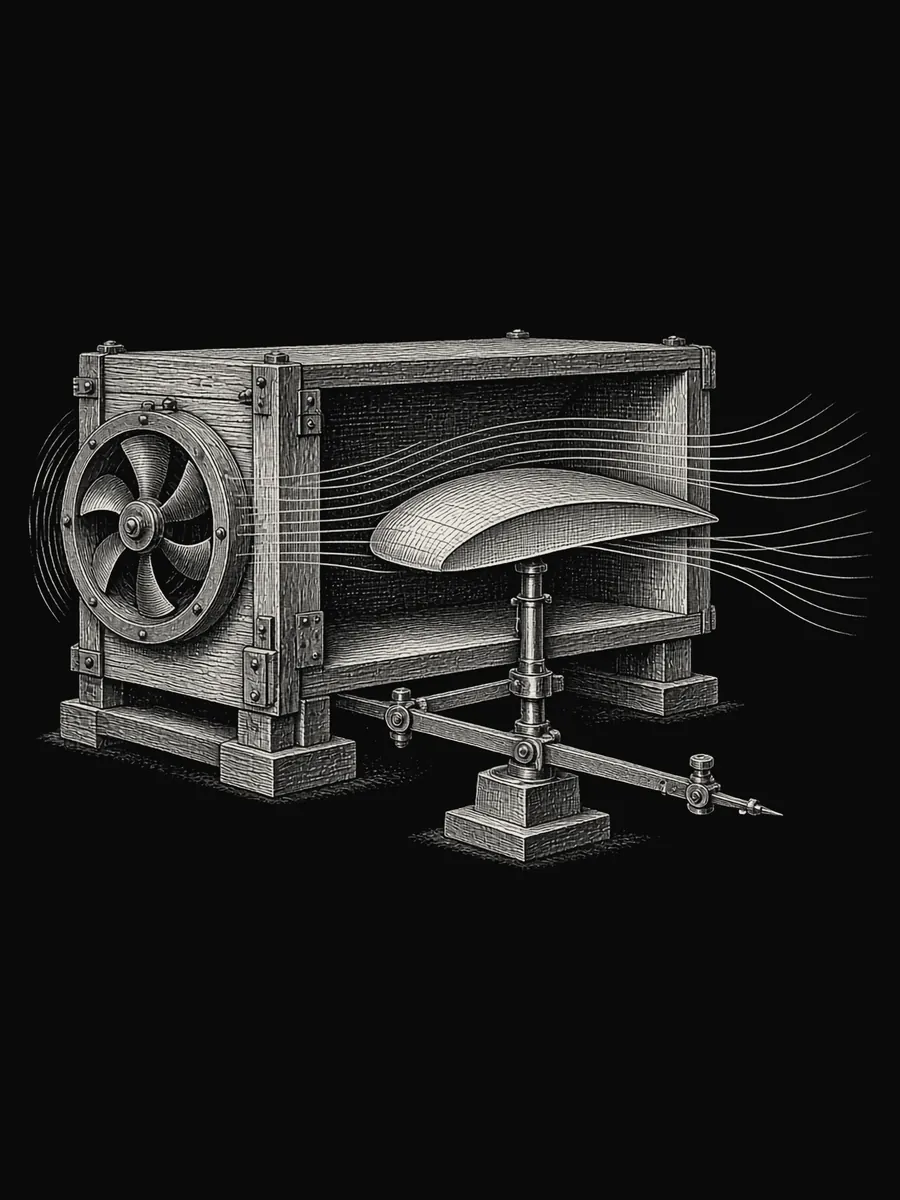
The glider that wouldn’t lift
The Wright brothers’ gliders kept underperforming. Their glider made only about a third of the lift the published tables predicted.
They could have blamed their own building. Instead they built a small wind tunnel and measured lift themselves. The standard coefficient everyone used was wrong. Their own numbers became the basis for the aircraft that flew.
Nature cannot be fooled
After the Challenger disaster, Richard Feynman ended his appendix to the official report with one sentence: “For a successful technology, reality must take precedence over public relations, for nature cannot be fooled.”
For founders, this is practical. Put your worst test result in the deck, and explain what you learned from it. The investors who matter will find it anyway, and a team that shows it is honest about failure is easier to back.
Take “impossible” seriously, not literally
Arthur C. Clarke’s first law: when a distinguished but elderly scientist says something is possible, he is almost certainly right. When he says it is impossible, he is very probably wrong.
Expert doubt is information. It tells you where the hard part is. It doesn’t settle whether the hard part can be done. Only a test does.
A test only proves what it asks
OpenAI and Anthropic both say their AI refuted the exponential time hypothesis, a conjecture in computer science that has stood since 1999. Both say Lean, a proof checker, verified the proofs. But a proof checker confirms the proof of the formal statement. It doesn’t confirm that the formal statement means what the paper says. Researchers are still working through that question.
A passing test only proves what the test asks. If you build evals, check the question before you celebrate the answer.
Where it goes wrong
- Trusting the table over your data. When they disagree, find out which one is wrong.
- Hiding the bad result. It comes out later, and costs more trust than it would have.
- Testing the wrong question. A green check on the wrong statement is worse than no check.
Try it this week
- List the one assumption from the literature your product depends on most.
- Design the smallest test that would check it yourself.
- Put your worst result so far in the deck, with what you changed because of it.
Sources
As posted
- Post on XClarke’s first law
- Post on XFeynman, in his Challenger appendix
- Thread on XOpenAI and Anthropic both say their AI refuted a 27-year-old conjecture in computer science.
- Reel on InstagramRichard Feynman, after Challenger: "For a successful technology, reality must take precedence over public relations, for nature cannot be…
- Post on XThe Wright brothers' gliders kept underperforming the published lift tables.
- Reel on InstagramThe Wright brothers' glider made only a third of the lift the published tables predicted.
- Reel on InstagramClarke’s first law: when a distinguished but elderly scientist states that something is possible, he is almost certainly right.